08061201.db
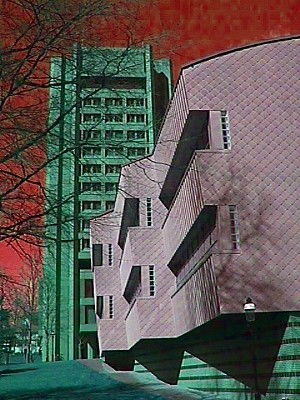
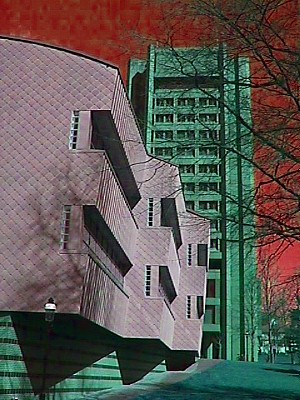
Electronic Calculation Center Olivetti, plans, scale comparisons.
| |
bored with modern & contemporary, yet?
2008.07.16 15:13
Vitruvius's book De architectura was rediscovered in 1414 by the Florentine humanist Poggio Bracciolini. To Leon Battista Alberti (1404-1472) falls the honour of making this work widely known in his seminal treatise on architecture De re aedificatoria (ca. 1450). The first known edition of Vitruvius was in Rome by Fra Giovanni Sulpitius in 1486. Translations followed in Italian (Como, 1521), French (Jean Martin, 1547 [10], English, German (Walter H. Ryff, 1543) and Spanish and several other languages.
On June 25, 1496 at the age of twenty-one, Michelangelo arrived in Rome.
Opposite it in the south transept is the Sagrestia Nuova (New Sacristy), begun in 1520 by Michelangelo, who also designed the Medici tombs within. [Michelangelo's first substantial architectural work.]
Architecture books were still fairly new and rare in Michelangelo's time, and they pretty much covered the basics (and anyone who could read, could grasp the basics). The greater architecture 'texts', however, were buildings themselves, and here the 'rules' are legion. I wouldn't say Michelangelo was intuitive in looking at existing architecture, rather sculpturally observant (and them sculpturally imaginative). Remember too, the most celebrated ancient columns in Renaissance Rome looked like this--hardly your 'basic'.
Another example of the sculpturally observant-sculpturally imaginative: Michelangelo himself wrote of how the newly discovered Belvedere Torso was a great inspiration for him. And now see how the ignudi of the Sistine Chapel ceiling represent the potential Michelagelo saw in the Belvedere Torso.
bored with modern & contemporary, yet? 2008.07.16 17:25
"In the past Eisenman has often been criticized for his reliance on concepts from outside of architecture. With this analytical work he declares explicitly that it is buildings themselves that are the source of ideas in architecture, and not applied philosphical concepts from outside the discipline"
--Stan Allen, "Eisenman's Canon: A Counter-Memory of the Modern" in Ten Canonical Buildings 1950-2000.
Leave to Allen and Eisenman to now 'declare' what is has otherwise always been one of architecture's most self-evident features. So Chris, the answer is yes!
Eyes which do not see, indeed.
The first chapter of Wittkower's Architectural Principles in the Age of Humanism is entitled "The Centrally Planned Church and the Renaissance". Good stuff about the theoretical origins of the centrally planned church and its practice; not much about any "true debate" nor popes.
beginning of the last paragraph:
The new interpretation of religious architecture was soon to be challenged. Carlo Borromeo in his Instructionum Fabricae ecclesiasticae et Superlectilis ecclesiasticae Libri duo of about 1572, applied the decrees of the Council of Trent to church building; for him the circular form was pagan and he recommended a return to the 'formam crucis' of the Latin cross.
bored with modern & contemporary, yet?
2008.07.16 18:09
Ah, the altar altercation!
"But in the thirty years between Alberti and Francesco di Giorgio, with centralized planning coming into its own, controversies flared which are faithfully mirrored in Francesco's text. These controversies were, however, not concerned with the liturgical suitability of centralized churches as such--which nobody seemed to have doubted--but with the question whether the altar should be placed at the periphery or in the centre."
|