| |
2003.01.12 13:56
Re: the dead end of urbanism as we know it
John wrote:
Just about any large city today, is part farcical staged phony history [etc.]
Steve asks:
What parts or are there parts of any large city today that are un-farcical un-staged un-phony [history]?
I ask because I would like to see what might be the opposite of 'farcical staged phony history.'
[possible leads:] Is NYC's Central Park a farcical, staged and phony history, hence a tragi-comedy reenactment? I'd say kinda-sorta, but it's very much liked nonetheless.
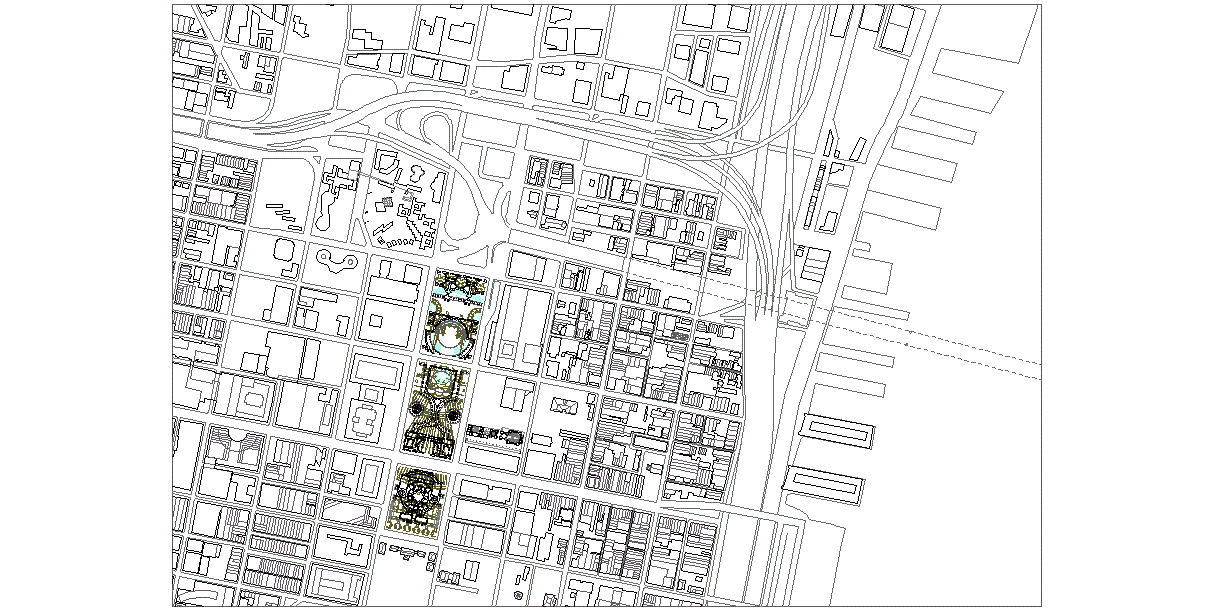
Philadelphia's original grid plan is patently a reenactment of ancient Roman military/colonial urbanism. When I worked downtown in the 1980s I never tired of the street theater, which I surmised was engendered by the average street widths (just a tad too narrow for a modern metropolis), but I never saw the plan as farcical, staged, or phony. [Or did I just contradict myself? I'm again reminded that where there's real reenactment, there's usually inversion as well.]
Philadelphia's Fairmount Park is the largest urban park in the world, and it has a large collection of historic homes, indeed country estates from the 18th century when what is now Fairmount Park actually was 'out in the country' relative to Philadelphia. None of this is farcical, staged, or phony, rather true history. When you are at Mount Pleasant, for example, a true Georgian Manor, and you look at the adjacent ball-playing fields of today, what you are also looking at is a very old field where crops used to be grown.
Philadelphia's Independence Mall is today being newly reconstructed. Pretty much all the new stuff is (going to be) farcical, staged, and phony history, but none of it is reenactment.
| |
2003.01.12 16:19
Re: the dead end of urbanism as we know it
I always thought it interesting that the oldest part of Berlin actually began as two cities (I guess towns, really), Berlin and Colln. Thus the two Berlins of the latter 20th century were not at all unprecedented for this place. [Dare I suggest that West Berlin and East Berlin were quasi reenactments of their very origin?]
Interesting too is how Berlin's growth over the last several centuries was more an assimilation of the towns/boroughs that surrounded old Berlin. Ungers, in the 1970s, liked to refer to Berlin as an archipelago, a group of islands.
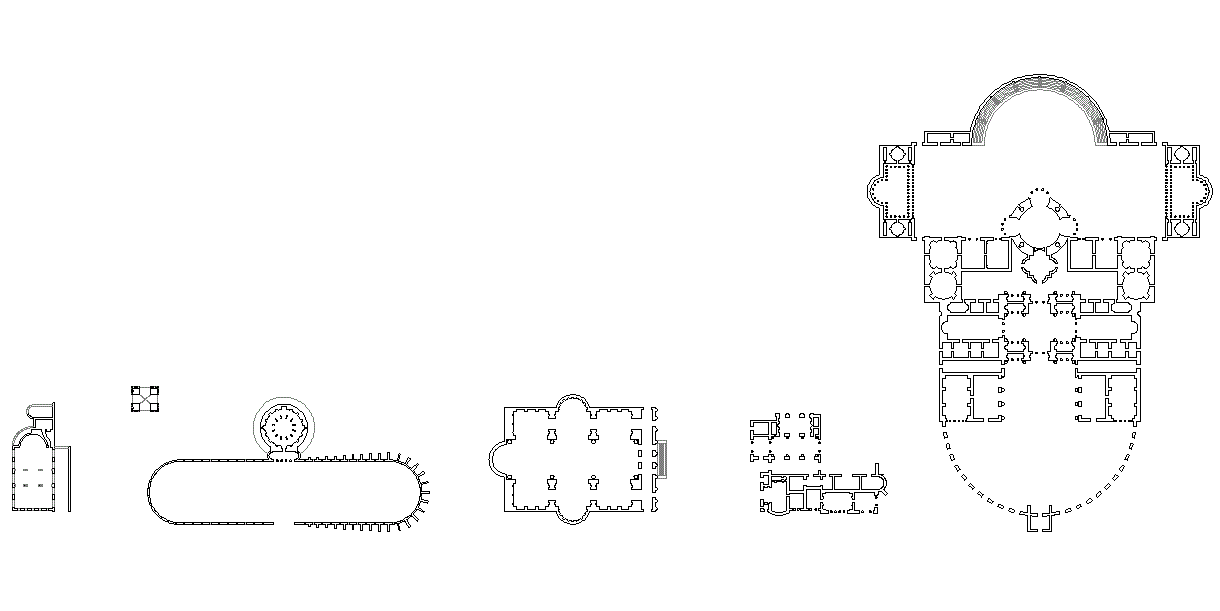
050112a Romaphilia Dominican Fortress 2348i11
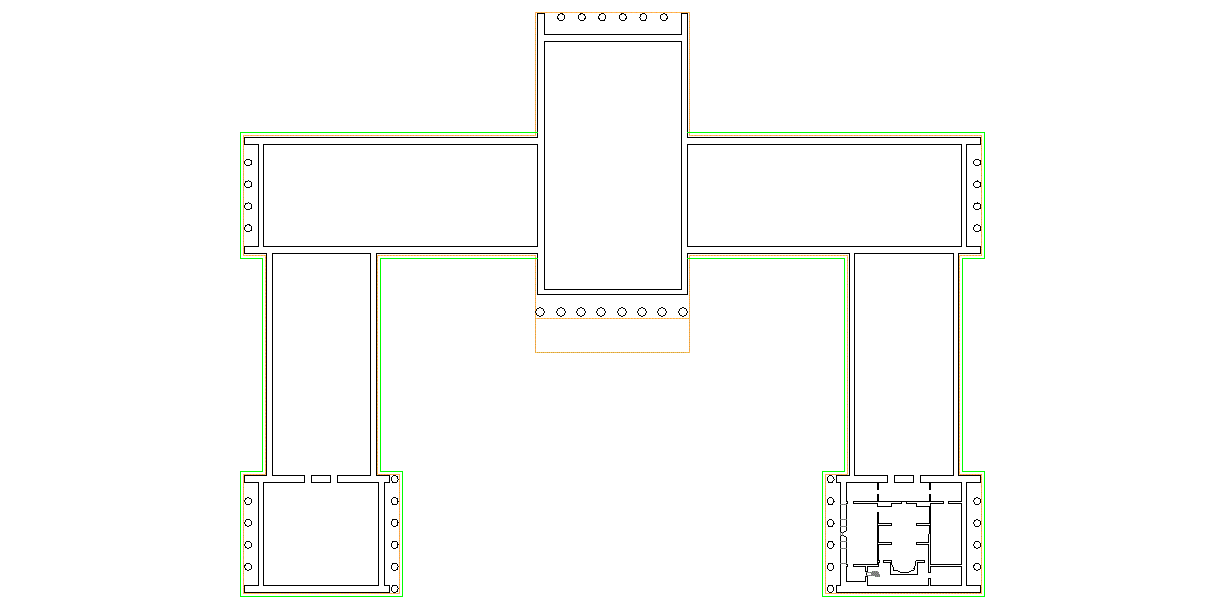
050112b Dominican Fortress plan development 2356i04
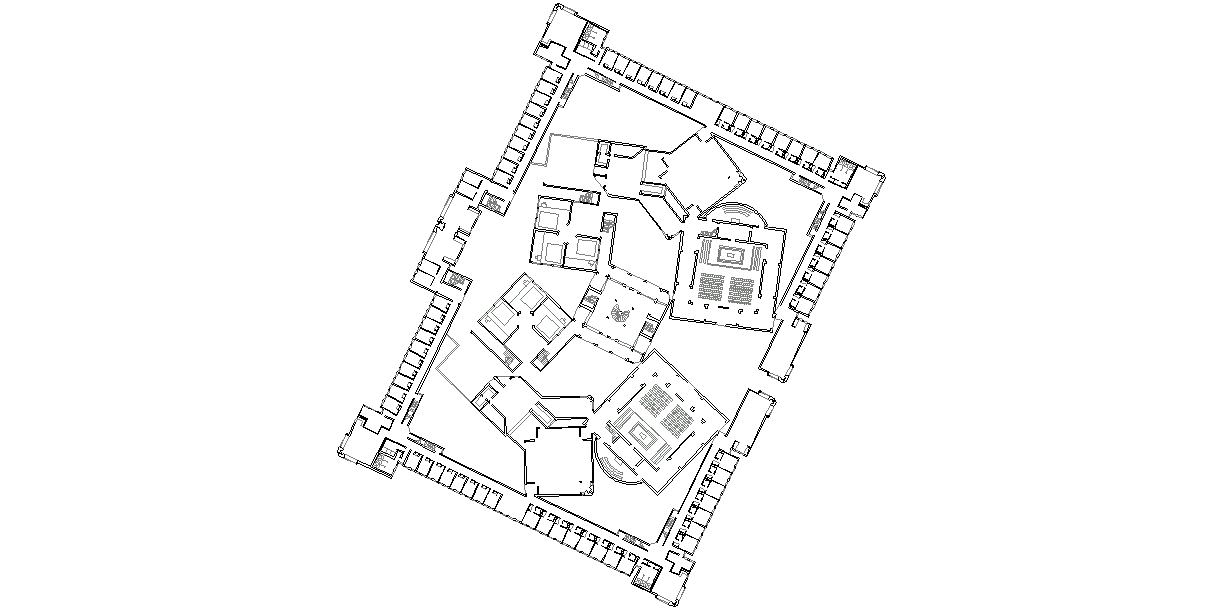
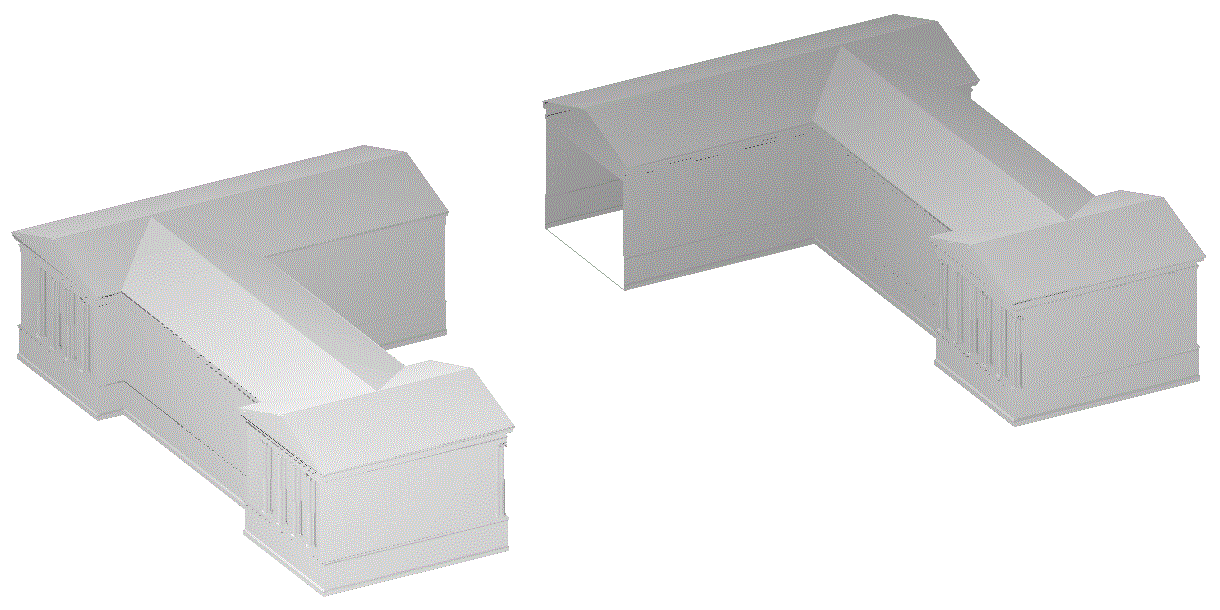
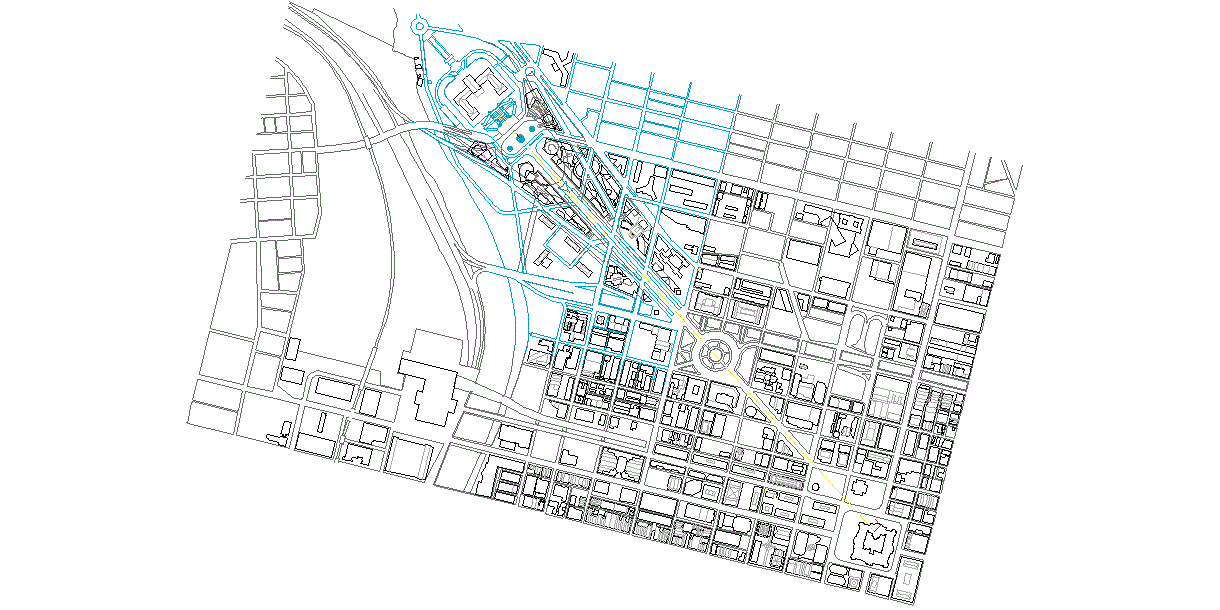
050112c Philadelphia Museum of Art model 2142i05
050112d Philadelphia Museum of Art plan 2142i06
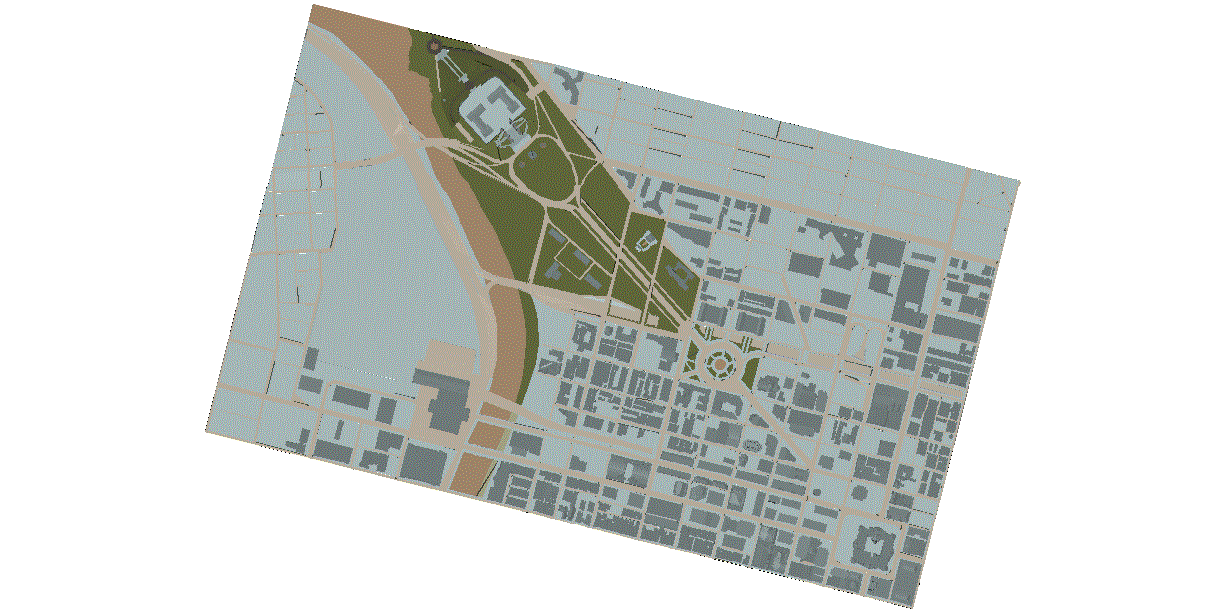
050112e Romaphilia Parkway quadrant model 2350i01 b
050112f Romaphilia Parkway Interpolation plan 2278i06
050112g Ignudi 2350i02
2007.01.12 11:57
any suggestion about Manual DeLanda courses in Upenn
Invalid design methods have a far greater impact, if you asked me.
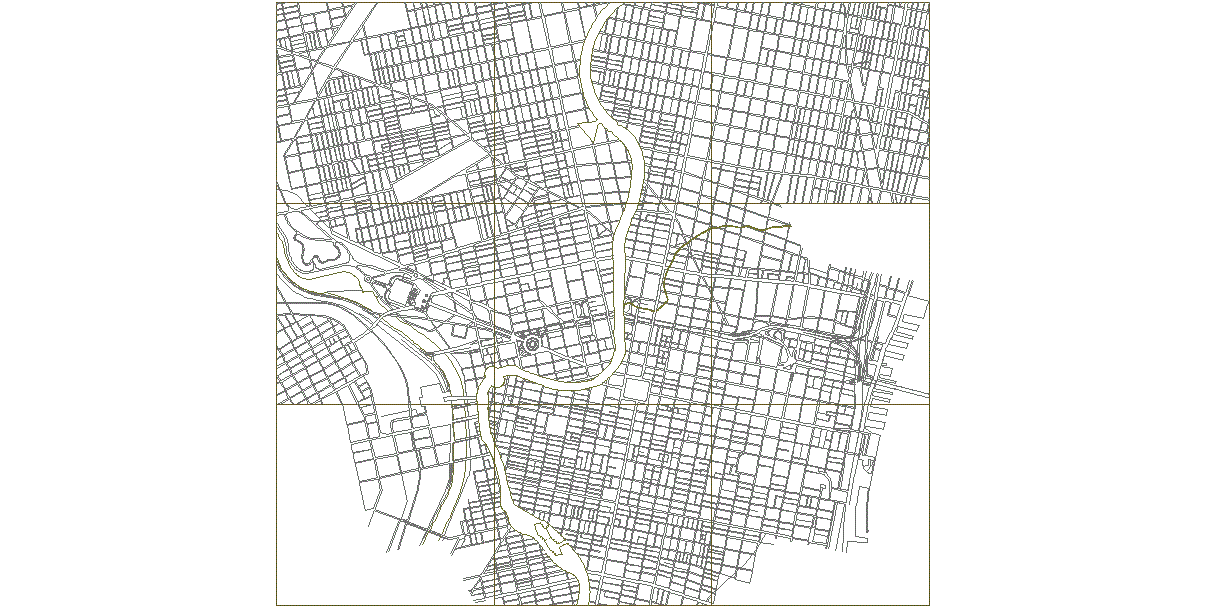
09011201 IQ Philadelphia street grid 2419i03
| |
2009.01.12
a real labyrinth
"A post about empty spaces - or lack of - feels like a suitable place to put Quondam, Stephen Lauf's epically impenetrable 'online collage', a real labyrinth of a website. Here, for example, you'll find information on the First Virtual House of the 20th Century, Robert Venturi's Franklin Court. Not just an empty room, but an empty house."
2011.01.12 21:03
"On Criticism" an aggregate thread
Criticism is not a post-rationalization of the processes.
Criticism requires research, investigation, thorough observation and even some analysis of the material at hand. There may be some explaining, but there is likely more a fair dose of qualified interpretation.
There are a nimiety of buildings of good (or bad) design, and that's about all that's worth saying about them. It's the building designs that elicit deeper thought that are worth critiquing.
13011201 Architecture of the 4th Century plans 206bi03
14011201 IQ09, Urban Components Franklin Square plans 2431i03
14011202 House for K.F. Schinkel early schematic plan model work 2239i05
| |
16011201 Herzog & de Meuron Children's Hospital
17011201 OMA Factory Arts Centre
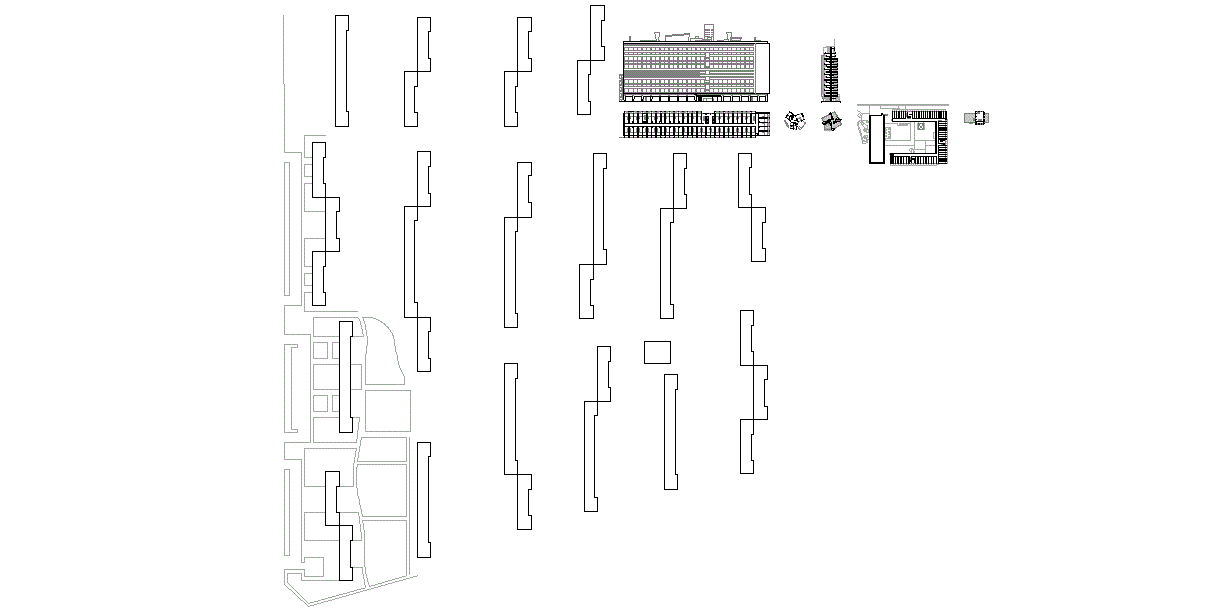
21011201 domicile 1952 Pruitt-Igoe Housing Unité d'Habitation Fruchter House Price Tower Monastery of La Tourette Robert Wiley House plans elevations 217ai14
21011202 Price Tower plan section 216ki03
21011203 Experimental House plan sections working data 216ni01
|