1998.02.09
D.A.T.A.
Department of Architectural Theory Annexation
1annex a : to attach as a proper attribute or as a distinctive quality b : to attach as a necessary consequence c : to add or join as a condition 2 a archaic : to add or join as an essential partss b archaic : to add or join as a subordinate or accessory part 3 a : to add at the end of something written or spoken : SUBJOIN, APPEND 4 a : to join in a closely united but subordinate capacity : take pocession or control of :assume rights or jurisdiction over; specif : to incorporate
2annex a : an added stipulation or statementss b: SUPPLEMENT; esp : a collection of supplementary structure either part of or separate from a main structure.
1999.02.09
ideas
5. maison millennium??
2000.02.09 16:21
the CAD experience
I am proposing that perhaps students learning design via early (if not only) use of CAD should be taught by those that have CAD design experience themselves.
How good is a piano teacher that knows all about music, but doesn't know how to play a piano?
It is generally accepted that CAD is a drawing /drafting TOOL. I think it's time to generally accept (and treat) CAD as a design INSTRUMENT as well.
2005.02.09 12:45
regarding museum queries
1999.04.17 07:44
test (poem?) by whomever
[architecture as interface comes with the architecture of schizophrenic interfacing...]
[buildings constantly move, doors can be windows, windows can be doors, stairs to Pilate are climbed annually on knees, walls may soon all talk, floors will mostly remain flat, ceilings with sprinklers are virtual skies that harbor emergency rain, roofs probably more than anything manifest architecture's shape, lights, camera, Africa, machines to create architecture with, furniture and painting as one, utilities that never fail (sic), plants, of course, grass gets high, sidewalk, siderun, sidecrawl, sidesit, sideroll-over, driveway complete with Jeep, garage sale as museum,..]
and through the fanlight
flies the fanmail
like a pigeon
with a fantail
=====
1999.05.27: camouflaged irony I'm sure
=====
2001.08.18 15:32
Happy Saint Helena Day
Then I took R. to Ryerss Mansion and Museum in Burholme Park. I've 'rediscovered' this place last December. It's one of those places you pass all the time, but never bother to look inside of. It's my new favorite place. I describe it as "'Venturi Shops' 100 years ago" because the VSBA 1995 exhibit Venturi Shops unwittingly reenacts exactly what Ryerss Mansion and Museum is, namely, an exhibition of things bought during excursions of India and the Far East (albeit 100 years ago). Because Ryerss is actually a museum of someone's shopping, there is an interesting Koolhaasian reenactment manifested here as well. Additionally, I tell R. my new typological interest is houses that morph into museums, of which Ryerss Mansion is a prime example of as well.
=====
2003.02.27 11:02
Re: WTC design study
Now I get it. The whole WTC design event so far is more than anything a museum of lobbies(?).
Museum Collecting Point One: Monument Hysterique.
Ms. Curious:
"So what do you do?"
Mr. Nimiety:
"I collect museums."
=====
a rose is a rose is a rose
=====
2001.02.01: "In the future, everything will be an advertisement."
=====
2005.02.02: "Museum Comes To Us: Art in 2050"
missing footnote:
1999.09.15 12:37
architecture in cyberspace?
First, I said, "I'd hate to see the virtual merely become a reflection of the real." This means I'd hate to see architects/designers/theorists neglect an investigation of the inherent qualities of the virtual/cyber realm, where they can find virtual/cyber's own "natural" order. For example, one huge difference between architecture in the real world and architecture in cyberspace is that in cyberspace actual buildings are redundant, indeed a real auction house that does what eBay does couldn't even be built. Another difference between real architecture and cyber architecture is that one goes to real architecture whereas cyber architecture comes to you. It may simply be that "real" architects have to begin also thinking about what it means to design architectures that go to people.
| |
2006.02.09 16:36
on REM again: isn't OMA just a waco?
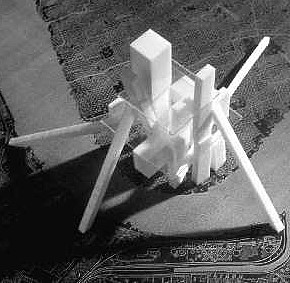
Hyperbuilding, Bangkok, 1996
GO EAST bank of Ohio River
...time is ripe for reenactment.
2007.02.09 22:19
Anyone support tearing it down?
I found out yesterday that, on 17 August 1824, the man who "founded the nation's first public museum" visited and sketched "Miers Fisher's House." I doubt the "rambling" 83 year old suspected that one day in the far off future that the first virtual museum of architecture online would eventually emanate from the same place.
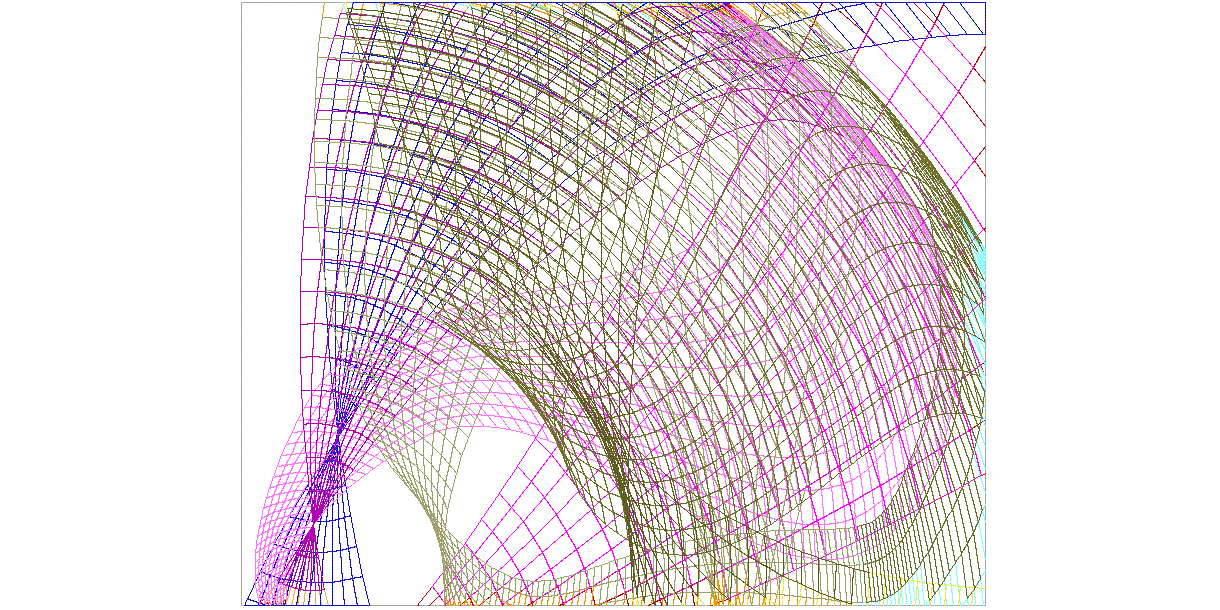
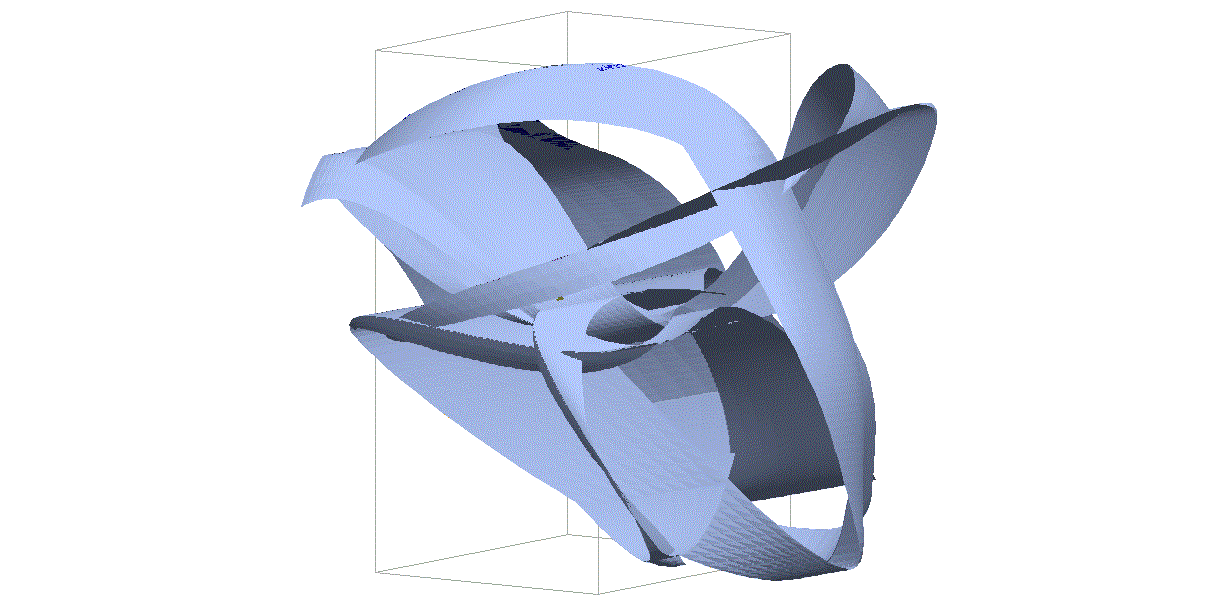
08020901 mesh surfaces models perspectives
2390i01
2009.02.09 09:14
Re: Reenacting Paintings
Finally read the article, and yes it would have been more complete if the notion of reenactment was also addressed, as reenactment involves all the issues: reproduction, cloning, authenticity, degrees of separation, even, to some extent, space-time. I'd say the degrees of separation issue is here the most important in that, like you mention, the reproductions come extremely close to the original, and can even occupy the space of the original, but the reproductions can never be the original. I'm reminded of that aspect of calculus where the curve continues to more and more closely approach + or - 1 but never reaches the actual integer itself.
"Bifuracted authenticity" is an interesting notion, but, in terms of authenticity, it's a little misleading--there is still really only one authentic work (the reproduction Marriage of Cana even in original context is still a reproduction). Nonetheless, it brings to mind notions of the Baroque--"Within his double theater Bernini capsulized the beginning of Western culture's new bifurcation of the real and the illusory, introduced mirroring as a henceforth dominant (post) Baroque (stylistic) theme, and, at base (or should I say at the ultimate end), inverted reality into a reenactment of its own illusory mirror (--is this perhaps also the genesis of historiography?)." Plus, the mystical notion of bilocation, or is it actually something scientific as in the space-time continuum? Is the match of the Campo Marzio Axis of Life and the Benjamin Franklin Parkway an example of "bifurcated authenticity"?
So, generally, my take on the article is that 'reenactment' is missing and really should have been included. Greenaway essentially performed two reenactments--one the reenacted natural lighting in situ, and two the reenacted lighting on the reenacted painting at another/nearby site--and Factum Arte reenacted the Marriage of Cana at its original site.
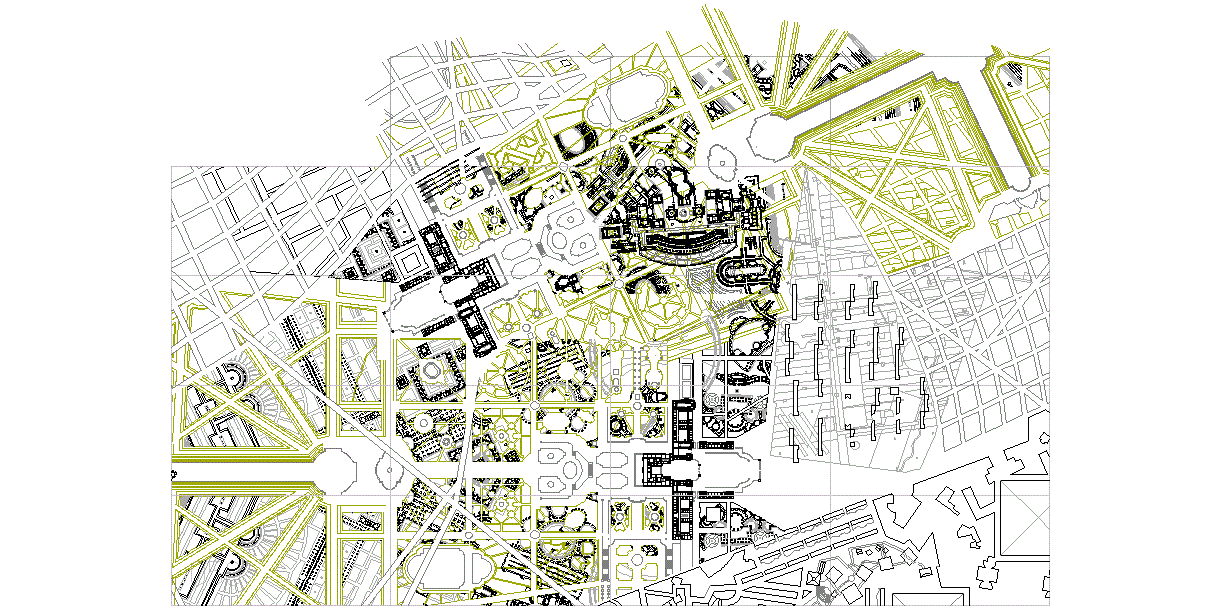
Here a Versailles, There a Versailles, Everywhere a Versailles, sigh--going Baroque in the space-time continuum!
| |
2009.02.09 10:25
TVCC ON FIRE
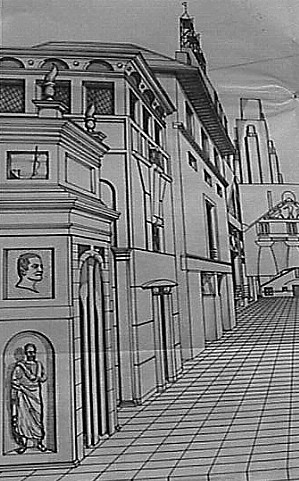
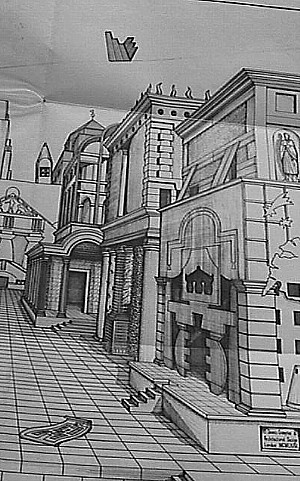
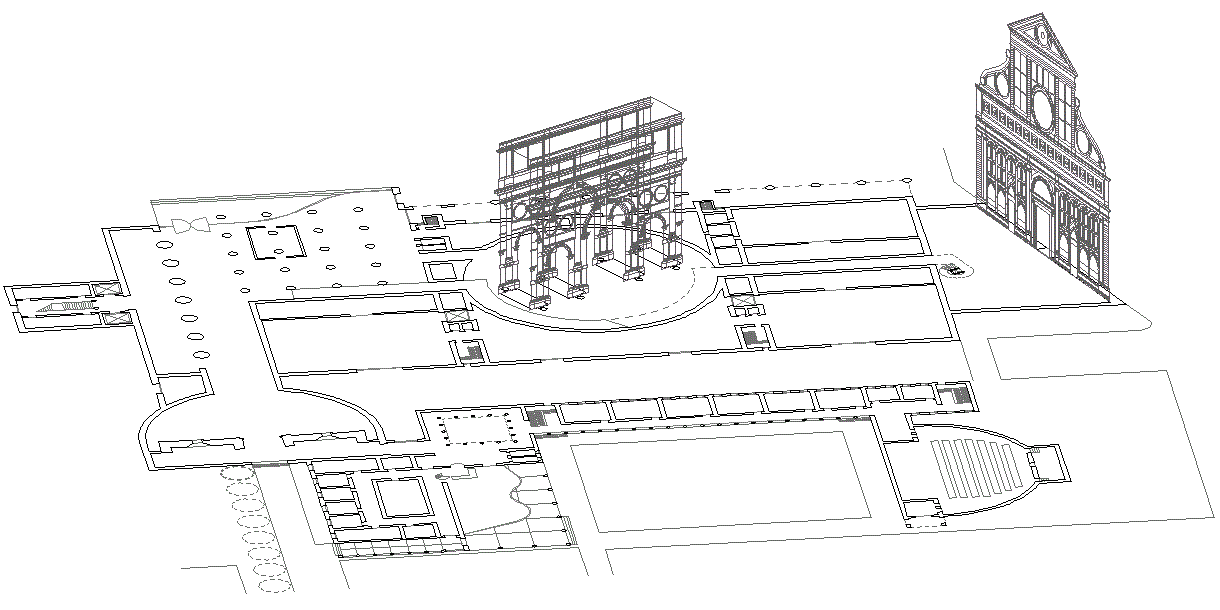
11020901 Arch of Constantine Santa Maria Novella within the Museum of Architecture
2245i05
2011.02.09 11:03
7 Wonders (and a half) of POSTMODERN architecture?
Everybody knows Sebastiano Serlio's figurative trilogy: Scena Tragica, Scena Comica, and Scena Satirica.
And yet there seems to be a 'missing scene' from Serlio: the stage set befitting plays for actors. I mean that stage set which does not simply transfigure the real world into fiction but which makes of fiction palimpsest texts.
Demetri Porphyrios
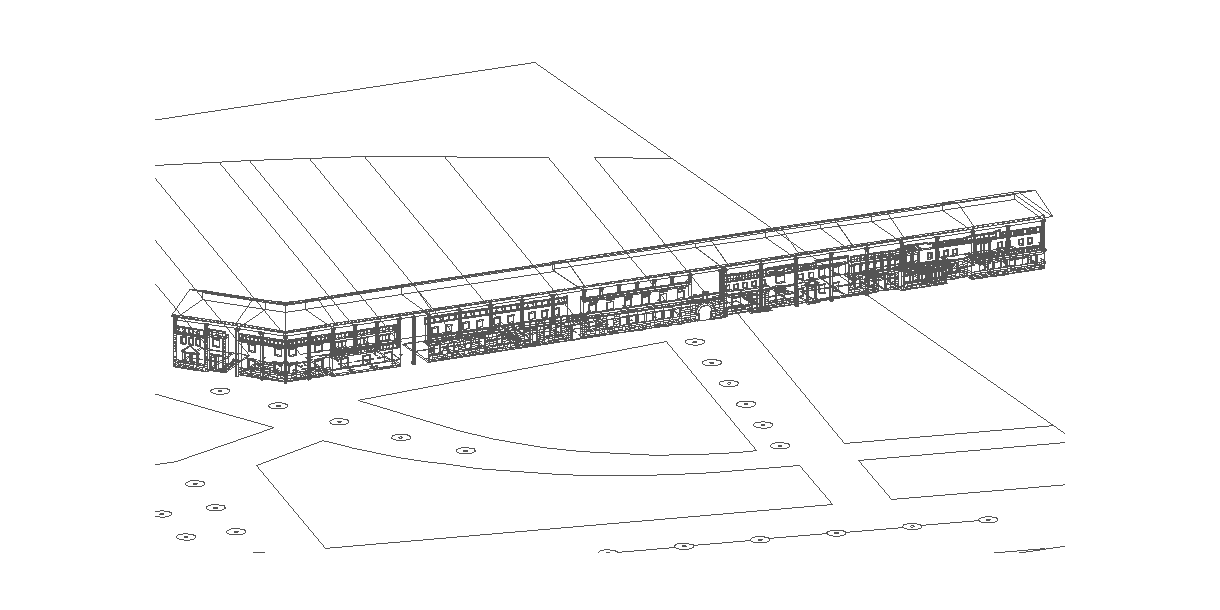
12020901 Houses Under a Common Roof linear models linear plans site plan
2170i25
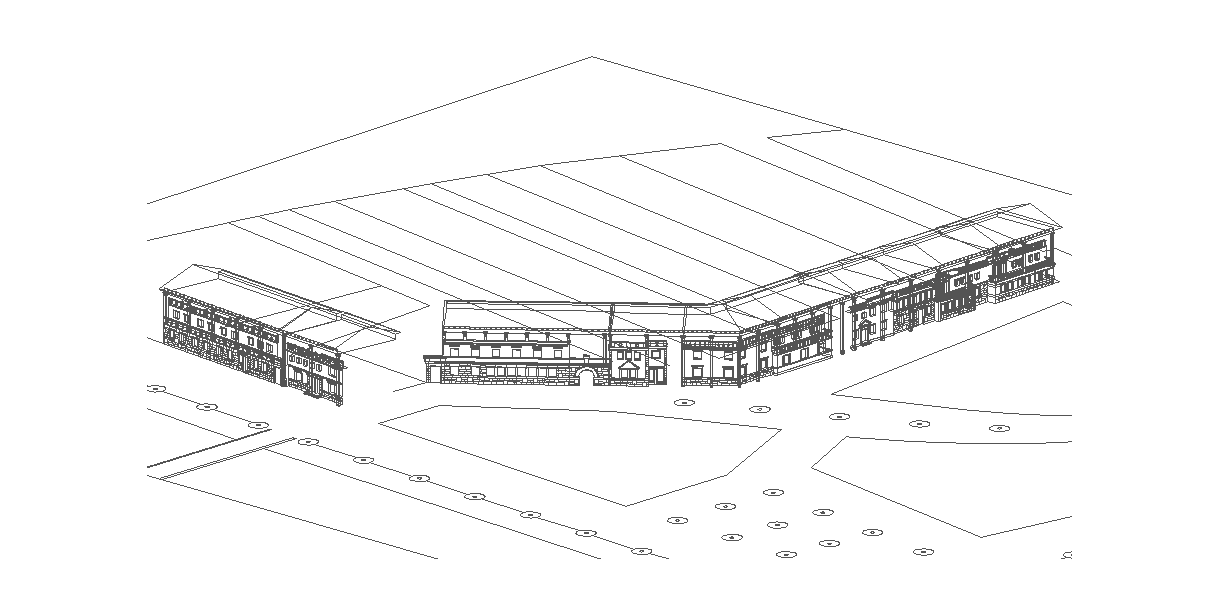
12020902 Houses Under a Common Roof models in situ plans site plan
2170i26
15020901 REMs inside a box model work/experiment
243di02
b
c
d
e
f
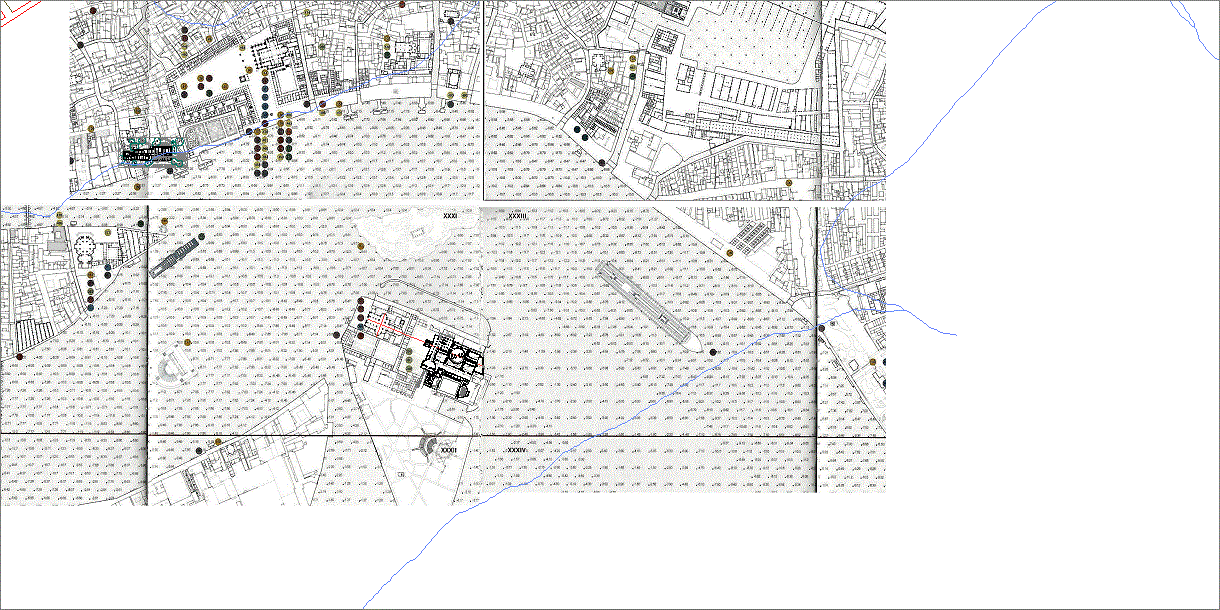
16020901 Museum of Architecture plan IQ48 Venice plan attached
2245i13
b
c
16020902 GAUA site plan IQ24
2429i135
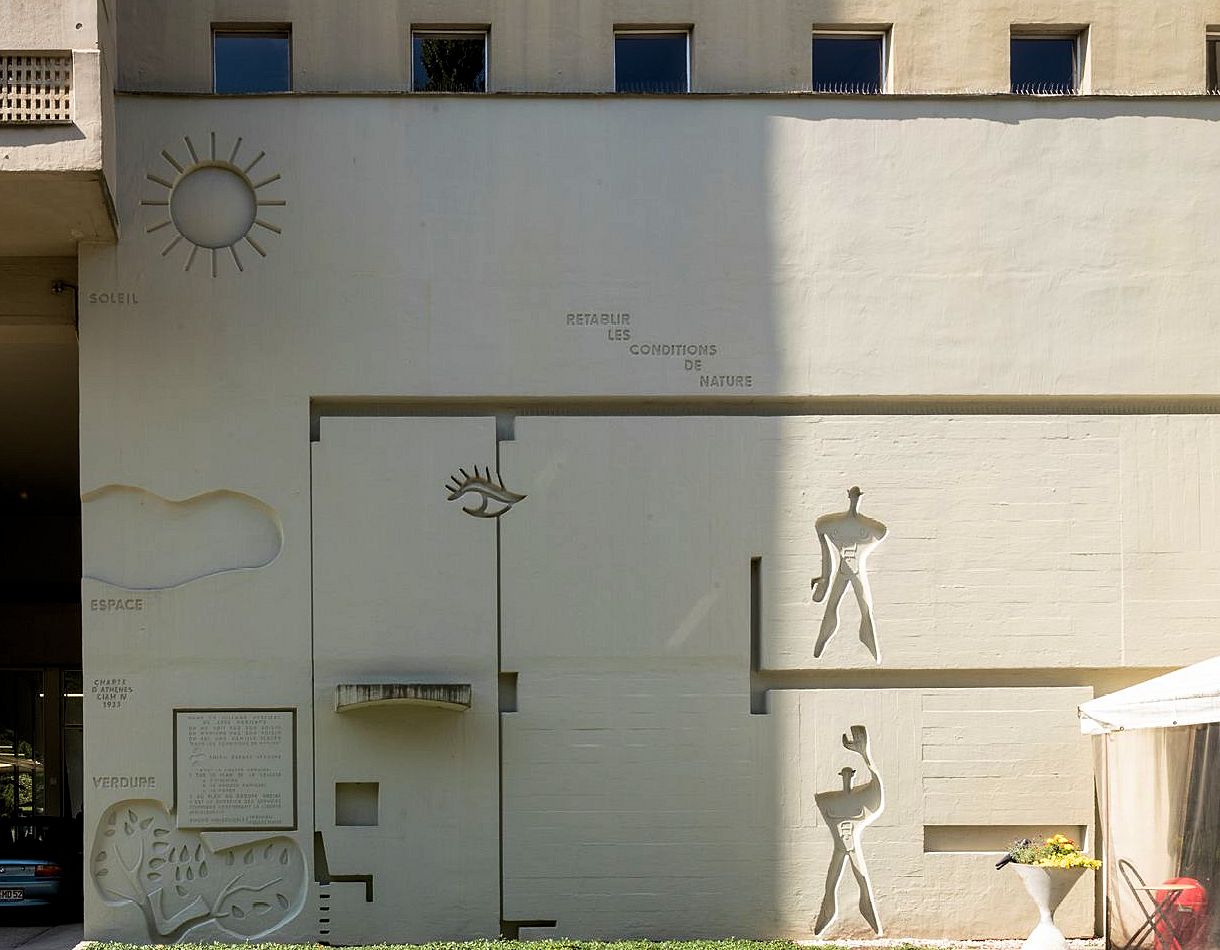
17020901 Le Corbusier L’Unité d’Habitation Berlin
18020901 Danteum Arbor Street House Farnsworth house Museum of Knowledge IQ45 plans
2165i15
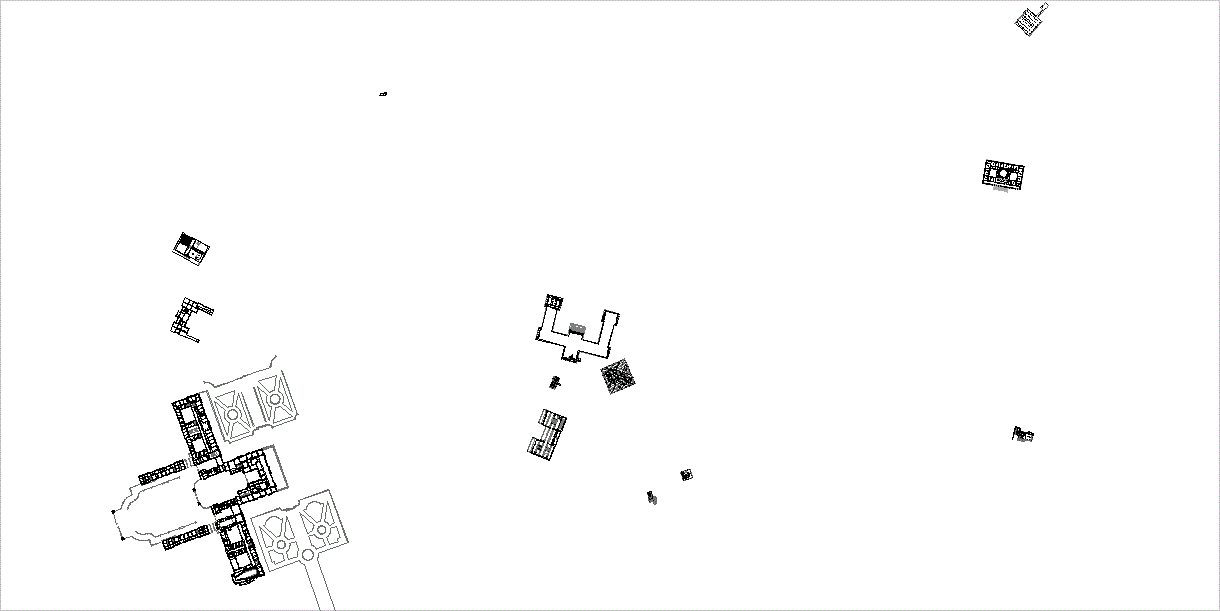
18020902 Palace of Versailles Altes Museum Whitemarsh Hall Philadelphia Museum of Art Villa Savoye Tugendhat House Danteum Arbor Street House Farnsworth house Museum of Knowledge plans
2165i16
18020903 Maison de l'Homme House 10: Museum Kimbell Art Museum Wall House 2 IQ46 plans
2196i12
18020904 Palace of Versailles Altes Museum Whitemarsh Hall Philadelphia Museum of Art Villa Savoye Tugendhat House Danteum Arbor Street House Farnsworth house Museum of Knowledge Maison de l'Homme House 10: Museum Kimbell Art Museum Wall House 2 IQ46 plans
2196i13
18020905 House 14 plans
2203i01
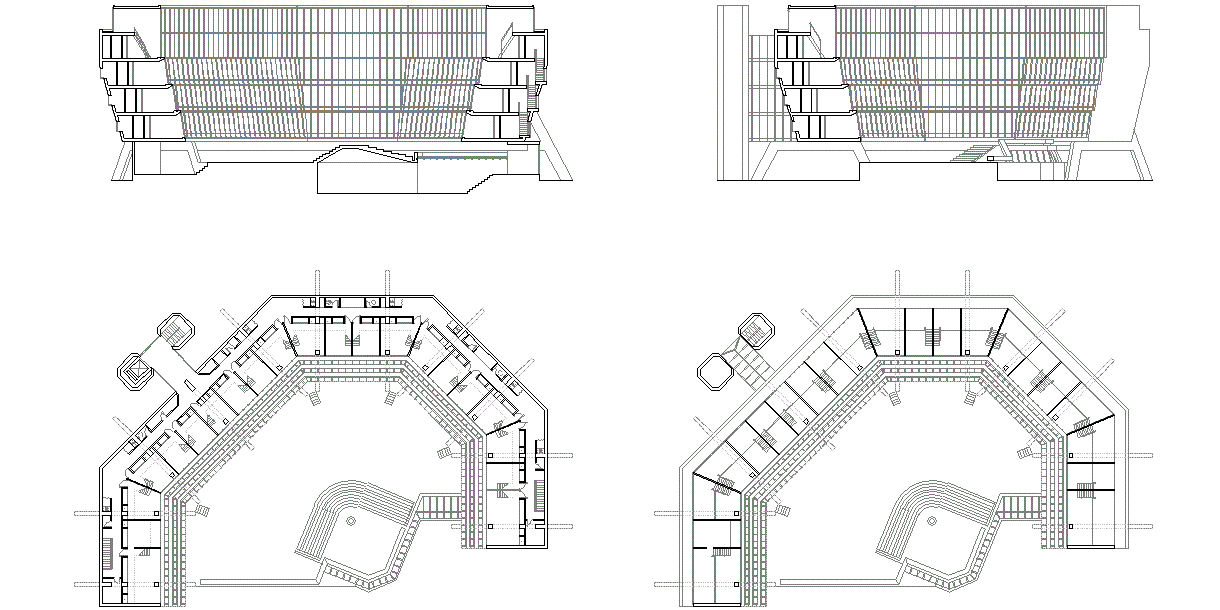
18020906 Florey Building plans sections
2202i01
|