1999.01.10 19:45
Re: Quondam's agenda
4. Quondam's began because of a substantial collection of computer models of significant architectural designs that were never built. Quondam is thus primarily a museum that is "not there" about architecture that is "not there", and the key to its "existence" is precisely the Internet/world wide web. Quondam is well aware of the technological and electronic medium within which it builds and designs, and, almost ironically, chooses to remain fairly "low-tech" in its web page designs for the very reason of sustainability. Simply put, Quondam is concerned with uncovering those natures of architecture that already exist but are nonetheless mostly unseen.
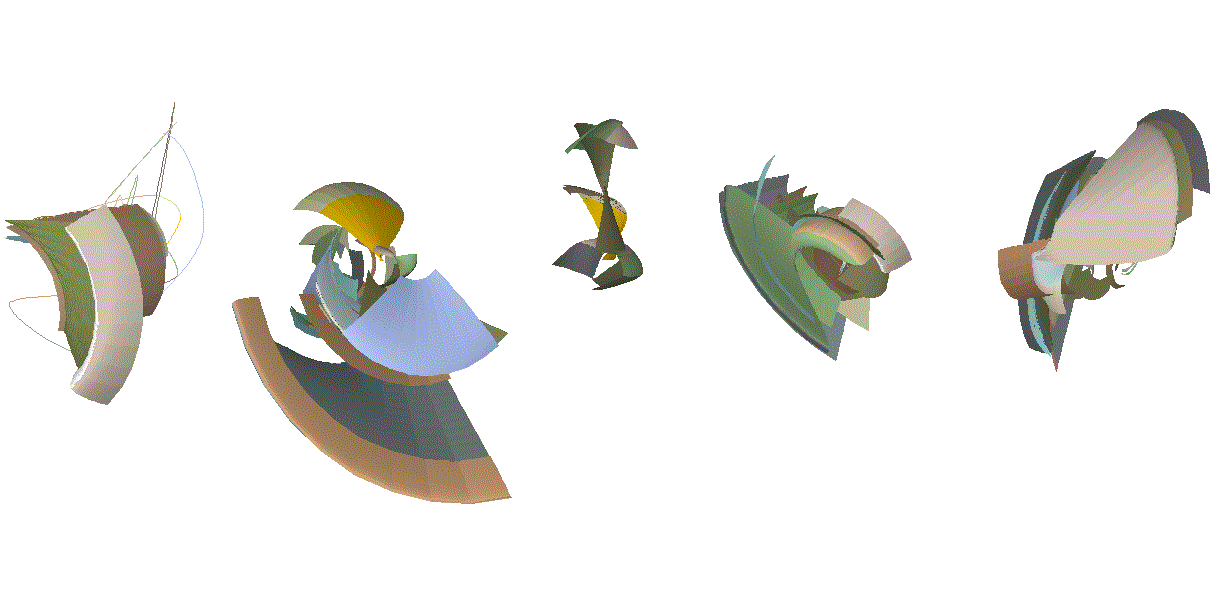
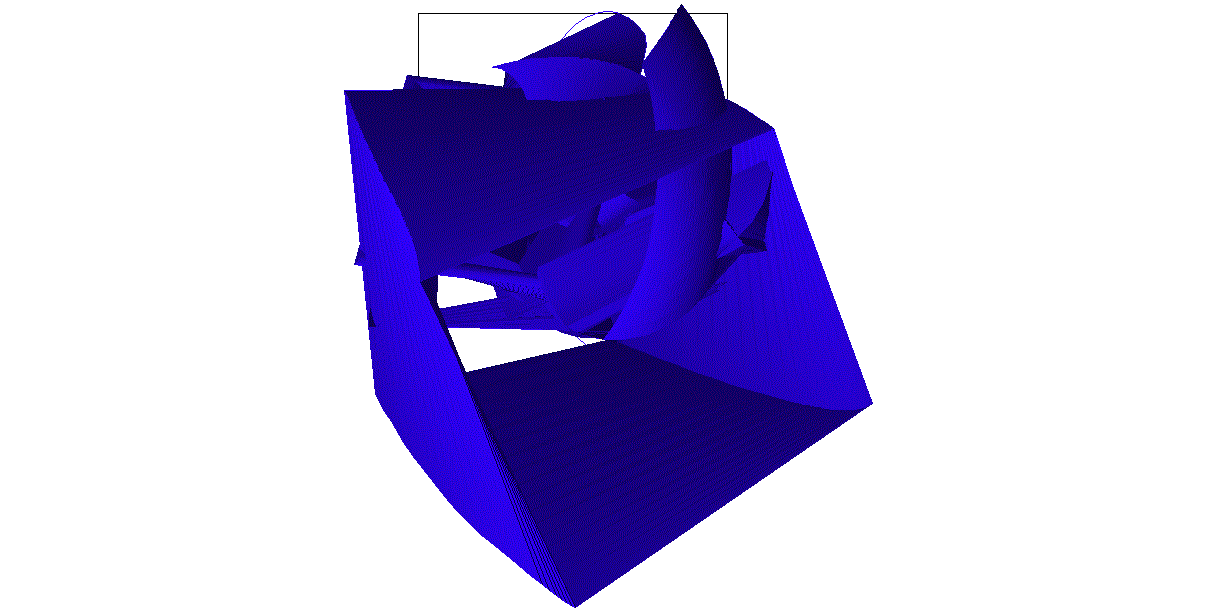
010110a rems models 231ai04
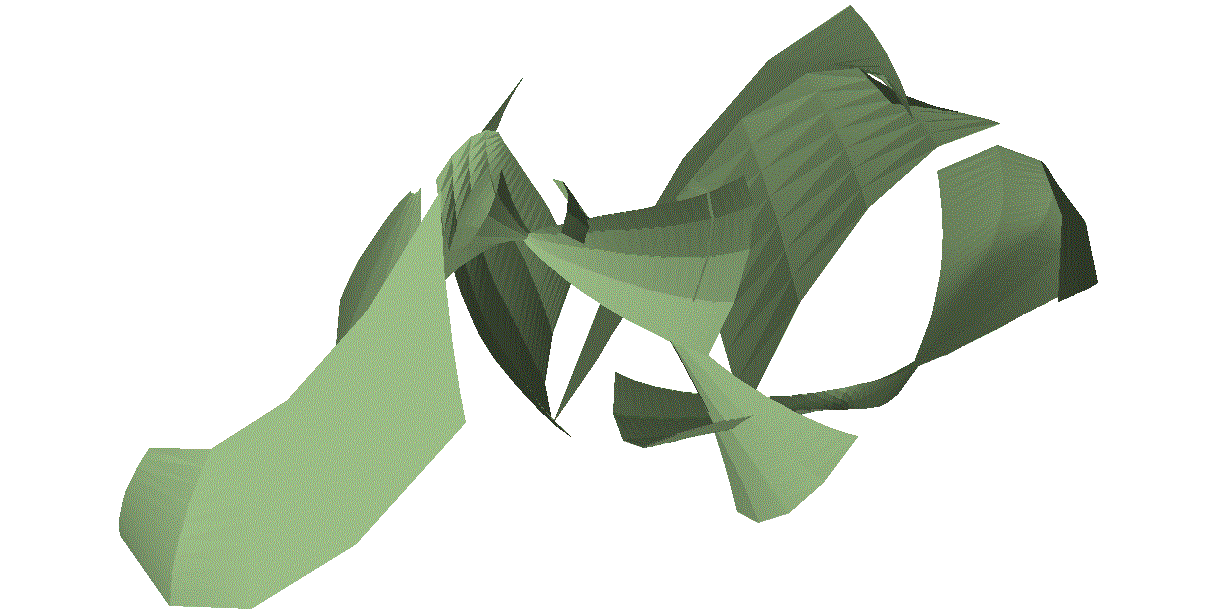
010110b rems models 231ai05
010110c rems models 231ai06
| |
2002.01.10 11:43
WTC Viewing Platform OR husker du redo
To be honest, I wish all the tragedies of 911 just never happened. I wish the WTC Towers were still there, and I likewise wish they could be replaced just the way they were. But all of it did happen, and we will most likely never again see WTC Towers like the ones we used to see.
I had dinner with my oldest aunt the other night. She has been diligently writing our family history. She is my mother's first cousin, and she was in the USA during WWII, while the rest of the family was in what is now Serbia. My aunt's history relates how it took her and her parents a couple of years to find out what happened to all their European relatives at war's end. She has collected the stories of the survivors--one story relates a completely chance meeting of a separated brother and a sister at the bombed out Munich train station, whose rubble was covered with posts identifying and searching for those that were missing. I was thinking something like "deja-vu all over again."
A book I read part of (something like a year ago) compares the post WWII rebuilding of Berlin (I think) and Munich. The case of Munich is interesting in that a complete 'reenactment' of the pre-WWII town center was what was done, while Berlin took the 'non-historical' approach. I'm not advocating one approach over the other, just calling out what may now be a timely study to know about. Incidentally, the rolling hills adjacent to the 1972 Munich Olympic Center are the "soot hills" created by all the debris removed from the town center during reconstruction.
| |
2002.01.10 19:49
Re: agree, but
Regarding civic involvement I'll try to answer this way. When reading about the ancient Roman Triumphs, it is always noted that the whole city shut down, and all the population went to stand along the route of the Triumph parade to watch. I was initially skeptical of this, especially the notion of a whole city shutting down, and everyone going to see a single event. Maybe it did happen then, but it seemed hard to believe that something like that could happen in modern times. Diana's funeral changed my 'perception' of this.
Yes, as I write this, I realize that there are indeed several such occasions to be noted in modern time, the JFK funeral for example.
Quickly, the other details reenacted are:
-- Diana's coffin drove through several arches, one of which was indeed a Triumphal arch.
-- four real Princes accompanied the procession.
-- the 'spoils' of Diana's work were present in all the representatives of her charities that walked in the procession behind the Princes.
-- the route of the coffin passed numerous military monuments, of which at least one represented a tableau of soldiers, much like the battle tableaux that were part of the ancient Triumph parade (the precursor I'm sure of today's parade floats).
-- the procession ended at Westminster Abbey, what one can easily refer to as the most sacred place in London; the ancient Triumph ended at the Temple of Jupiter, the most sacred place in ancient Rome.
As I'm writing this I'm reminded of the movie A Special Day (I think that's the title). It starred M. Mastrioni and S. Loren, and the day was in Rome when Hitler came to visit Mussolini (two grim reenactors if there ever were any). All of Rome went to see the parade, and Mastrioni and Loren found themselves to be the only people in their apartment building, and the story of the movie goes on from there. Maybe when you see something in a movie it still feels just a bit unreal, just a play reenactment. Maybe what struck me so much about Diana's funeral is that it was just like a movie, but indeed real.
ps
John Young just coined the term "exenactments". I wonder if some events that immediately remind one of a movie but are indeed real could be called exenactments. Events like September 11 maybe?
| |
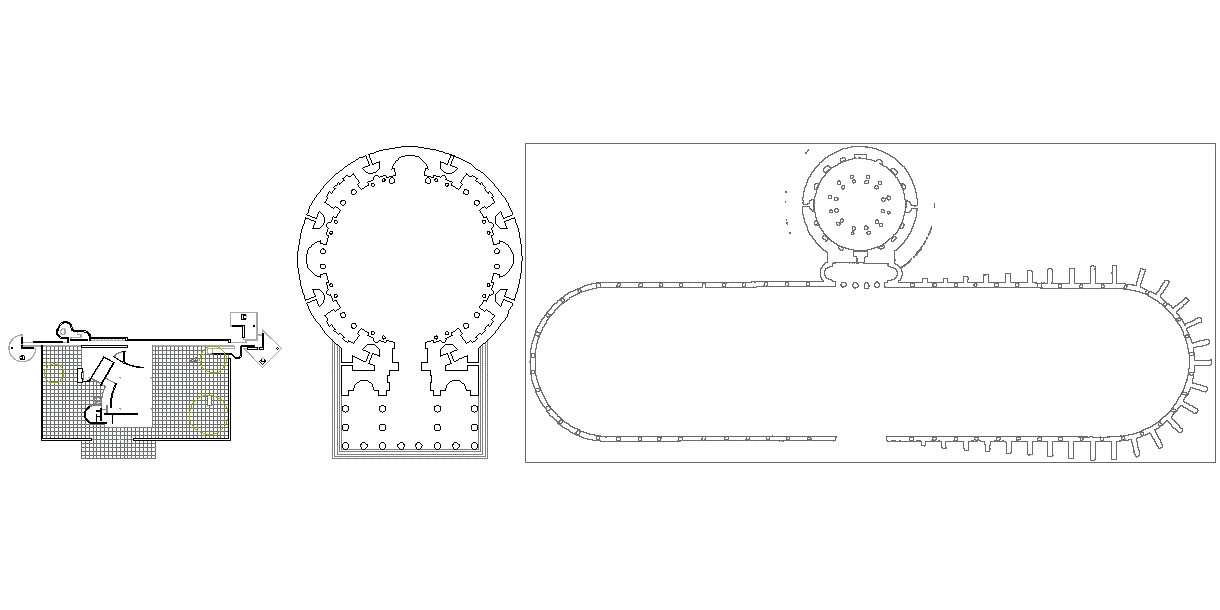
09011001 Pantheon Courthouse Plus Ultra plans 2419i01
2013.01.10 18:47
Please help identify the architectural style of my house.
I think a clearer benchmark for American homes (design and construction) is pre-WWII and post-WWII. And it's not so much the education of the designer. For the whole industry, everything pre-WWII just seemed too old-fashioned for post-WWII. And, by the 1970s, the price of labor and materials started to steadily rise, thus rendering the 'old-fashioned' ways more or less completely obsolete. And, by the mid-1980s Post-Modernism brought 'style' back into the design equation. But 'style' and 'the old-fashioned way of doing things' are not the same thing.
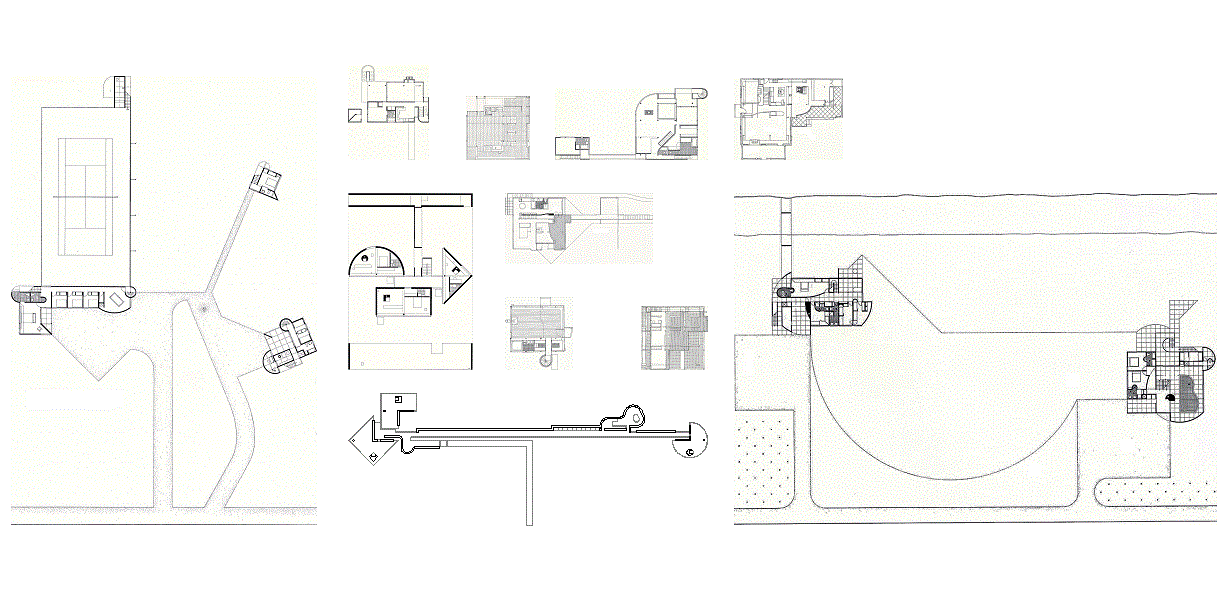
15011001 Five Architects plans images attached 2208i07
| |
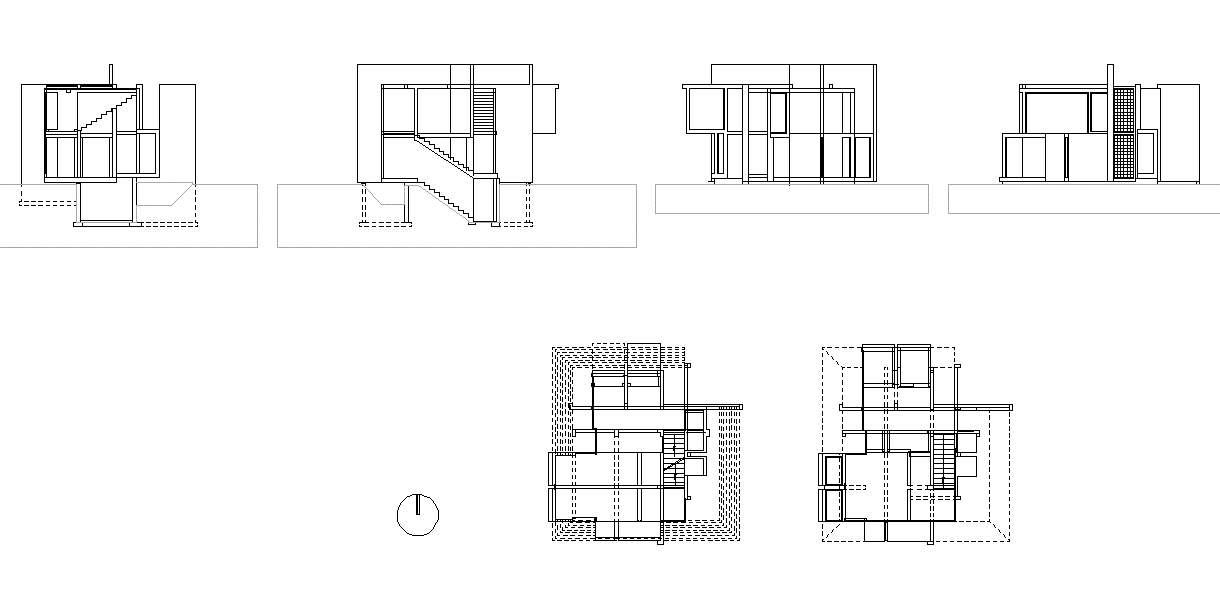
16011001 House VI plans elevations section nts
2220i01
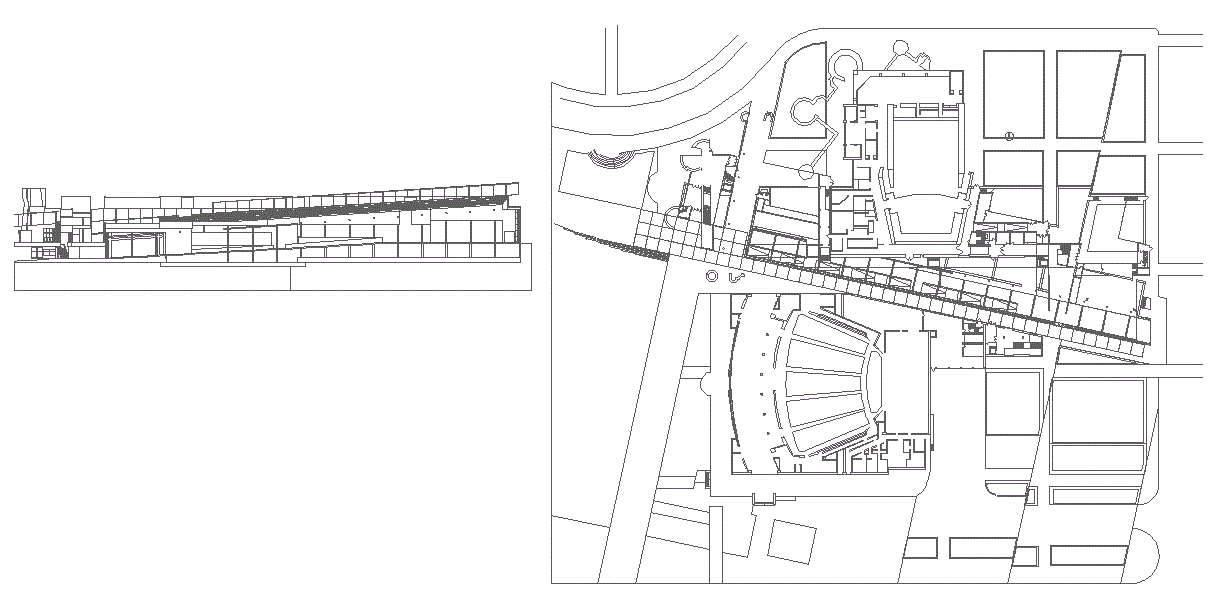
16011002 Wexner Center for the Arts plans elevations section nts
2251i01
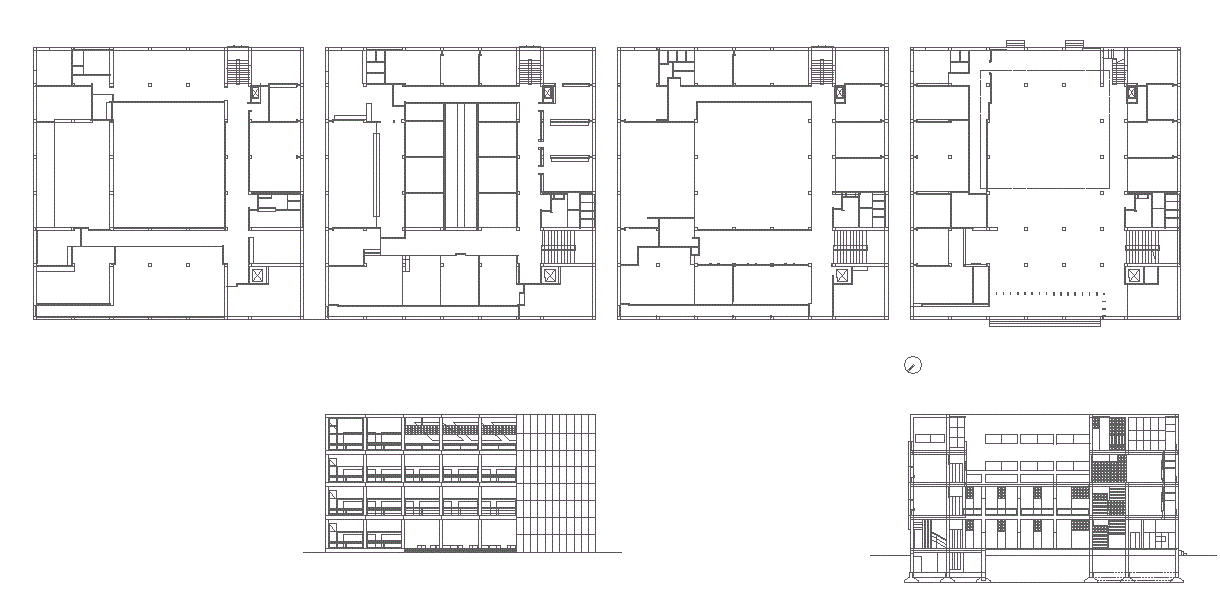
16011003 Casa del Fascio plans elevation section nts
2161i01
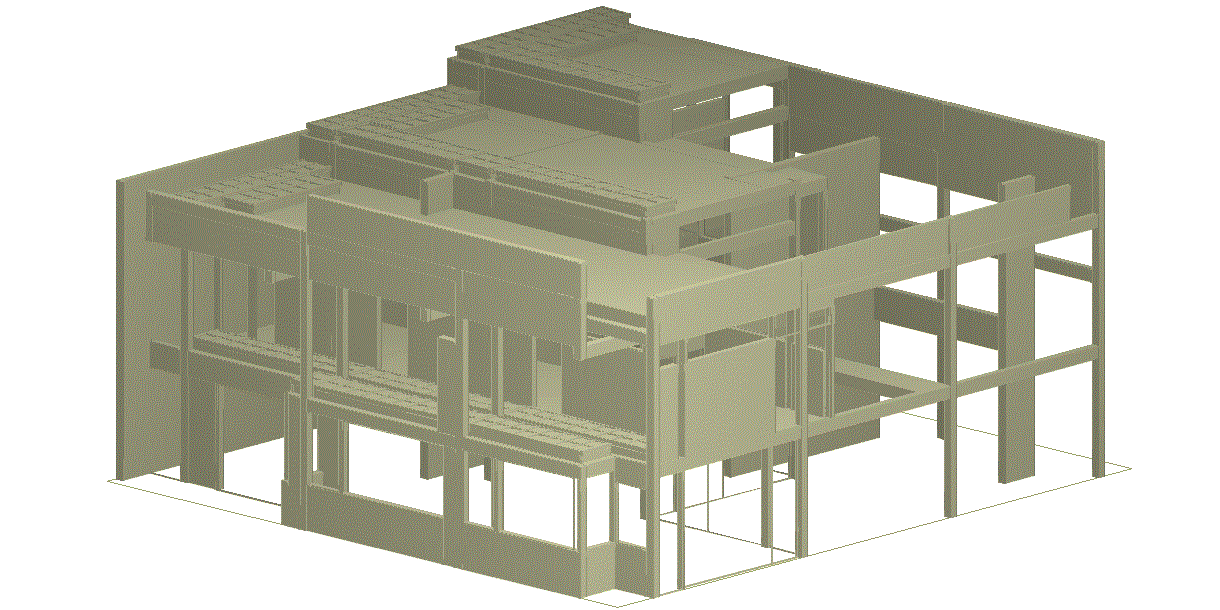
16011004 House II model nts
2211i01
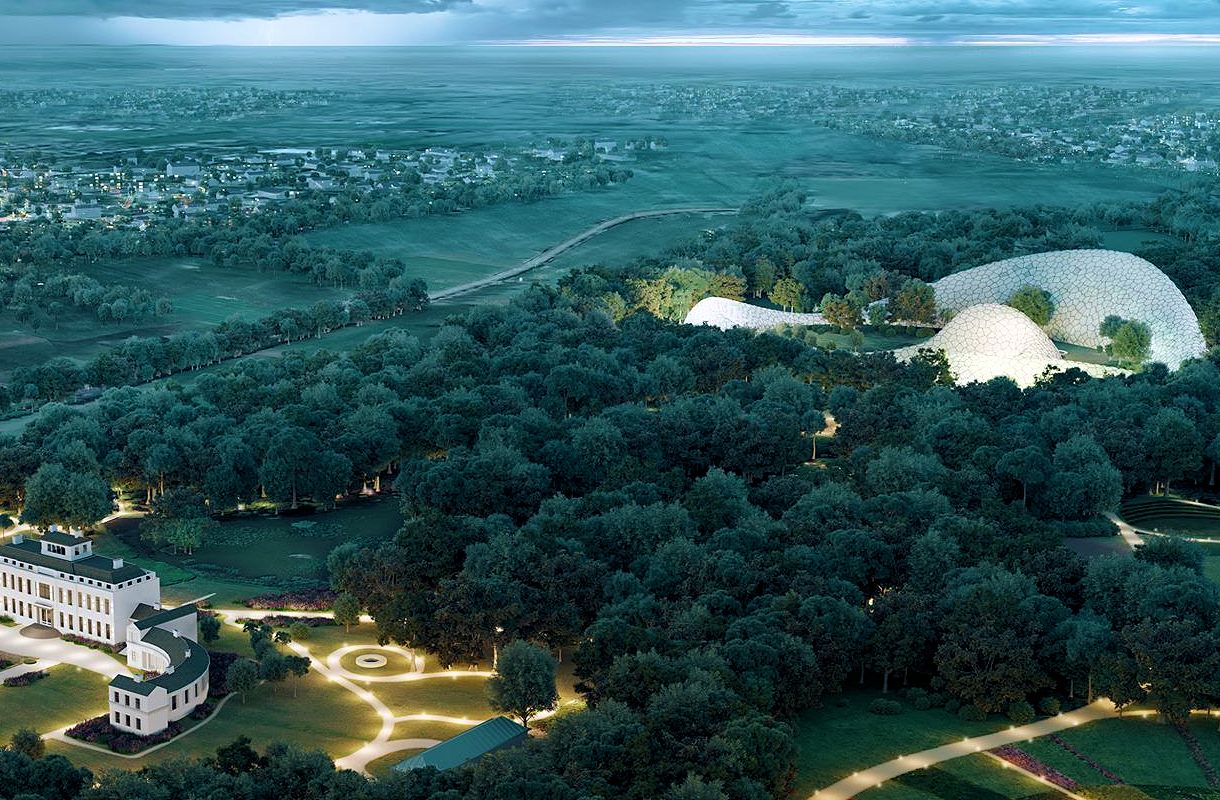
17011001 Mecanoo Eden Soestdijk
20011001 iqq19 Novel Architecturale Roma Interrotta
2481i10
20011002 iqq19 sector 11 Novel Architecturale Roma Interrotta Danteum Dominican Motherhouse Acadia HQ Neue Staatsgalerie
2481i11
|